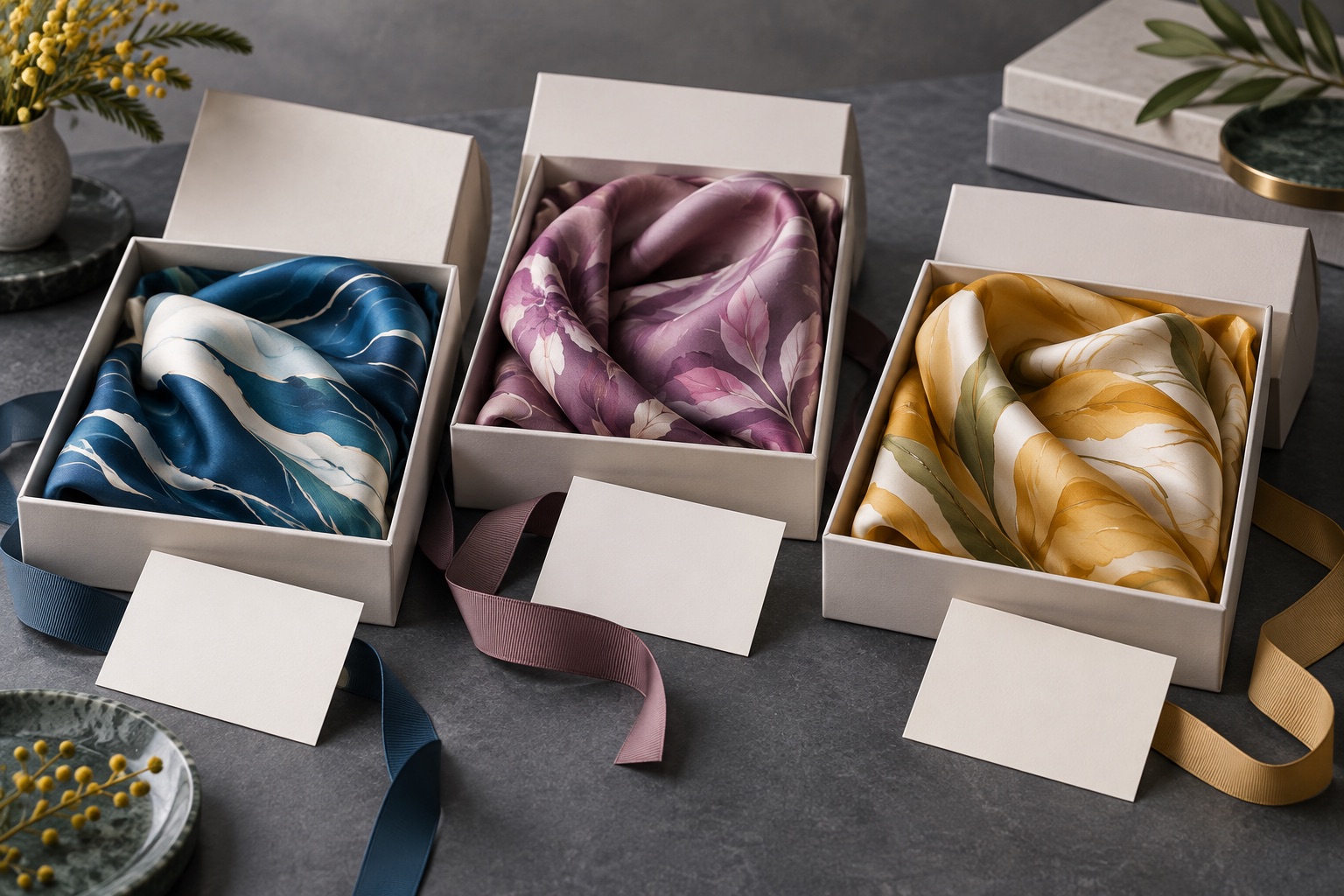
A corporate scarf does not need to look like promotional merchandise. It can carry a place, anniversary, collection or shared idea in a genuinely wearable form.
Define the moment
Begin with why the scarf is being given. A milestone, conference, cultural partnership, client thank-you and employee recognition program each suggest a different tone. Write one sentence that describes what the recipient should feel when opening it. That sentence becomes a useful filter for every design decision.
Translate the brand instead of repeating it
A large repeated logo is rarely the only way to create recognition. Consider brand colors, architectural details, landscapes, product forms, founding stories or a pattern derived from the organization’s visual language. A discreet signature or logo can then confirm authorship without overwhelming wearability.
The scarf should still feel relevant after the event is over.
Design for the recipient
Think about climate, dress habits, travel and the setting in which the scarf might be worn. A classic square offers broad styling flexibility; a smaller scarf is easy to gift and carry; a long format can work well with uniforms or formal styling. If the recipient group is varied, a versatile size and balanced palette are often more useful than a very specific styling concept.
Build a controlled palette
Corporate colors may be part of the design, but they do not need to occupy equal space. Use neutrals to create breathing room and decide which hue acts as the accent. When an exact brand color matters, provide a reference and approve it on the final silk.
Plan the message around the unboxing
A short card can explain the story behind the artwork, artist collaboration or occasion. Keep the scarf free to be visual; let the card carry detailed context. Packaging should be easy to distribute, travel well and present the piece consistently.
Consider a family of related designs
For large or recurring programs, a collection can share one structure while varying motifs or accent colors. This gives recipients choice and keeps future editions connected. Establish the common system—format, border, silk and packaging—before creating the variations.
Build the timeline backward
Include time for design alignment, artwork preparation, sampling, review, production, packaging and delivery. Add internal approval time, especially when several stakeholders need to sign off. A clear final delivery date is useful, but intermediate decision dates are what keep the project moving.
Corporate gift brief checklist
- Occasion and intended recipient
- Quantity and required delivery window
- Preferred format and styling use
- Brand assets and color priorities
- Story or visual theme
- Packaging and message-card needs
- Approvers and sampling process
- Delivery destinations and distribution plan
Make a desirable scarf with a meaningful connection to the organization. Brand recognition should support wearability, not replace it.