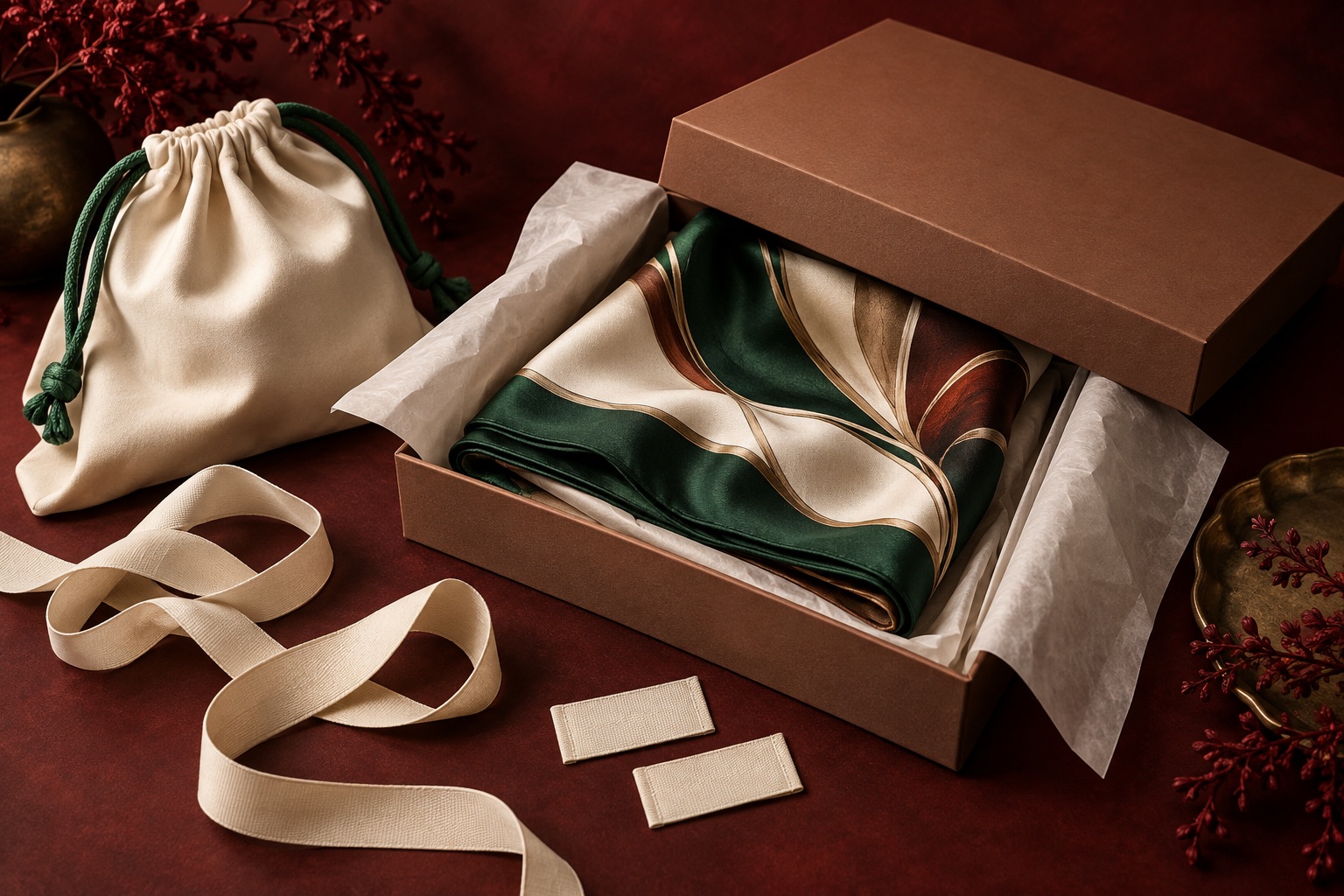
A silk scarf is tactile and expressive. Its packaging works best when it creates anticipation without competing with the product inside.
Begin with the scarf fold
Before choosing a box, decide how the scarf will be folded. The fold controls the package footprint, thickness and first visible area. Test the actual fabric and hem because a large or substantial scarf may need more space than a paper calculation suggests.
Choose which part of the artwork should greet the customer. A considered fold can reveal a signature motif or color while keeping the rest protected.
Give the scarf room
A box that is too tight creates hard creases and a cramped experience. A box that is too large allows the scarf to shift. Tissue, a light paper band or a well-fitted insert can hold the fold in place, but every layer should have a purpose.
Create a clear brand hierarchy
Decide where the brand appears and at what scale. The outer box, inner tissue seal, hang tag and care card do not all need equal emphasis. One confident mark supported by quieter details often feels more premium than repeating the logo everywhere.
Packaging is the frame. The scarf should remain the artwork.
Choose surfaces that support the product
Matte paper, lightly textured board and restrained foil or ink can complement silk without imitating its shine. Consider how light colors will resist handling marks and how dark colors may show scuffs. Ask for a physical sample of the package materials rather than relying only on rendered visuals.
Plan labels and information early
Care information, fiber content, origin statements, retail labels and market-specific requirements may affect the package. Determine what is required for the regions where the product will be sold and have the final copy reviewed by the appropriate business or compliance owner. Leave enough room for information to remain readable.
Think about logistics
A beautiful presentation box still needs to travel efficiently. Evaluate outer-carton fit, protection from crushing and the total package weight. If the scarves are used for events or gifting, make sure individual units are easy to distribute and identify.
Prototype the full unboxing sequence
- Open the shipping carton and inspect protection.
- Lift the presentation box and note how it feels in hand.
- Open the lid and check the first view of the scarf.
- Remove tissue or bands without snagging the silk.
- Unfold the scarf and see whether creases relax naturally.
- Confirm that care and brand information are easy to find.
Design packaging around the folded scarf first. Then add only the structure, branding and information that improve protection and presentation.