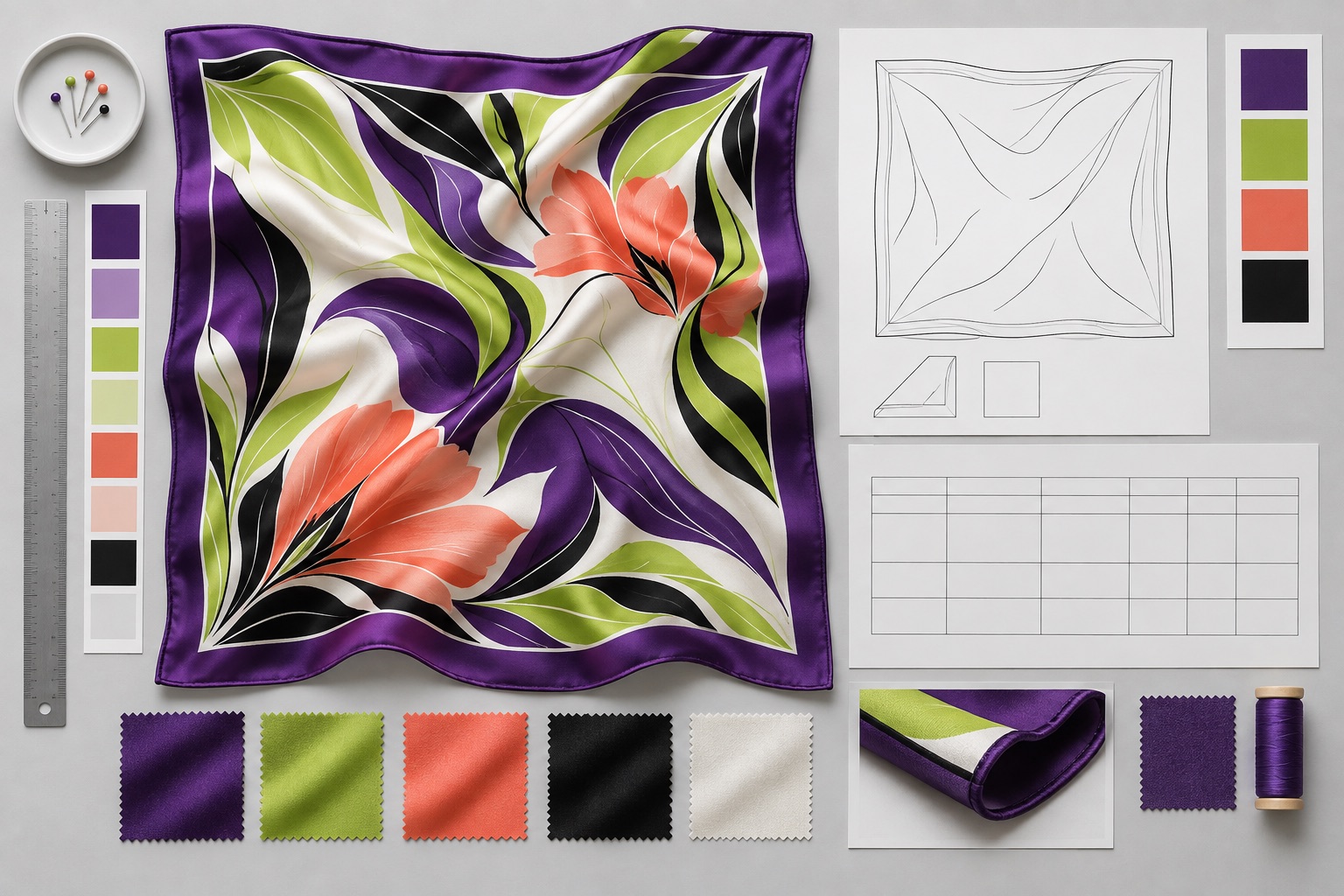
A tech pack translates creative intent into a product specification. It does not need to be complicated, but it must make decisions visible and reduce the number of assumptions a factory has to make.
Product identification
Give every design and colorway a unique style code, name and revision date. Include the brand, season or project and contact person. Use the same codes on artwork, sample comments, order documents, packaging and carton labels.
Finished dimensions and shape
State width and length after hemming, units of measure and acceptable tolerance. Add a flat diagram showing corners, angled ends or unusual shapes. Mark the print orientation and identify the front face if the design is directional.
Fabric specification
Record fiber composition, silk construction, nominal momme, base color and finish. If a specific swatch has been approved, reference and attach it. Avoid descriptions such as “premium silk” without a measurable construction.
Artwork and color
Link the final production file and show a reduced layout in the tech pack. State artwork scale, border dimensions, repeat information and Pantone or other color references. Provide a color table for every colorway and identify brand-critical targets.
Printing requirements
Specify the agreed print method, face and reverse expectations, color penetration or double-sided requirement, and any registration priority. Add a note that physical strike-offs or scarf samples require written approval before bulk production.
Hem, thread and labels
Describe hand-rolled or machine finishing, finished edge width, roll direction and thread color. Show label type, size, material, artwork, fold and placement with measured distance from the edge. Include care-label wording only after checking destination requirements.
If a detail matters, show it in a diagram or reference sample instead of relying on an adjective.
Packaging and assortment
List folding method, protective sleeve, tissue, insert, box, barcode and warning labels. Provide an assembly image and quantity per inner and master carton. For several colorways, state the exact carton assortment.
Quality and approvals
Add measurement points, tolerances and inspection criteria. Record approved strike-off, scarf sample, label and packaging sample with dates. Create a comment log that explains each revision and whether a new physical sample is required.
Keep one source of truth
Issue numbered versions and withdraw outdated files. Send one consolidated package rather than mixing attachments from different email threads. After approval, archive the final tech pack with production and inspection records for future reorders.
A useful tech pack identifies the scarf, defines every physical component and records approvals. Clarity at this stage saves time throughout production.