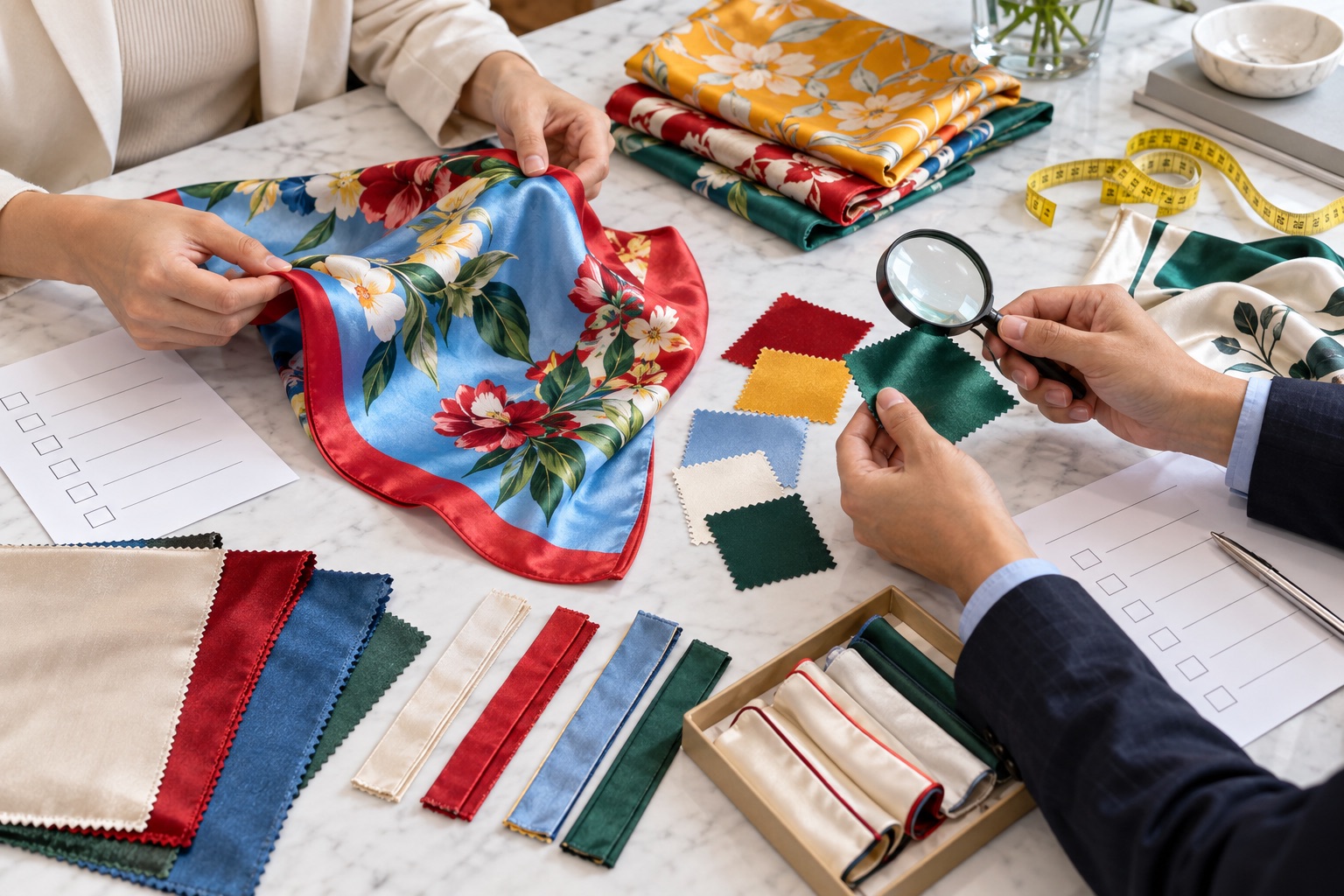
Supplier evaluation is easier when questions are tied to your product and delivery risk. Prepare a brief first, then look for specific answers, physical evidence and a process that can be documented.
What silk constructions and weights do you offer?
Ask for named fabrics, nominal momme, swatches and recent examples. Confirm whether the factory stocks the material or sources it for each project. A supplier should explain how twill, satin, habotai and chiffon change print and drape.
Which printing method fits this artwork?
Share the real design, quantity and color count. Ask why digital or screen printing is recommended, how the reverse will look and whether fine lines or large dark areas present challenges. Useful answers connect the method to your artwork.
How are colors approved?
Confirm accepted reference systems, strike-off procedure, lighting and revision limits. Ask whether a physical print test is available on the chosen fabric and how approved samples are stored for bulk comparison and reorders.
What is the MOQ per design and colorway?
Clarify total minimum, split minimum and what happens when sizes or fabrics differ. Request price breaks at realistic quantities. Ask which parts of the specification could be simplified if the first order needs to remain small.
How is sampling managed?
Request the steps, timing, fees, shipping method and sample types. Confirm whether the sample uses production fabric, print and hem. Ask who reviews technical feasibility before sampling and how revision comments should be submitted.
What are the production tolerances?
Discuss finished dimensions, print position, color, hem and hand-finishing variation. Ask for the inspection standard and acceptance process before ordering. Vague promises are less useful than measurable criteria and a physical reference.
A credible factory explains limitations and tradeoffs as clearly as capabilities.
Who controls each production stage?
Understand whether printing, washing, cutting, hemming, labels and packing are performed in-house or by partners. Outsourcing is not automatically a problem, but responsibility for quality and schedule should be clear.
What is included in the quotation?
Check silk specification, printing, hem, labels, packaging, sample fees, testing, inspection, cartons and delivery term. Ask how long the price is valid and which events can change it. Compare like-for-like specifications.
How are delays and defects handled?
Ask about communication, correction, remake criteria and evidence required for a claim. Define the inspection and approval point before shipping. Keep purchase terms and responsibilities in writing.
Can you support a reorder consistently?
Confirm how artwork, color formulas, approved samples and material references are archived. Ask what may vary between fabric lots and how long records are retained. Reorder planning matters for brands building a repeatable program.
Choose a factory that answers with product-specific detail, documents approvals and makes responsibilities visible from sampling through delivery.