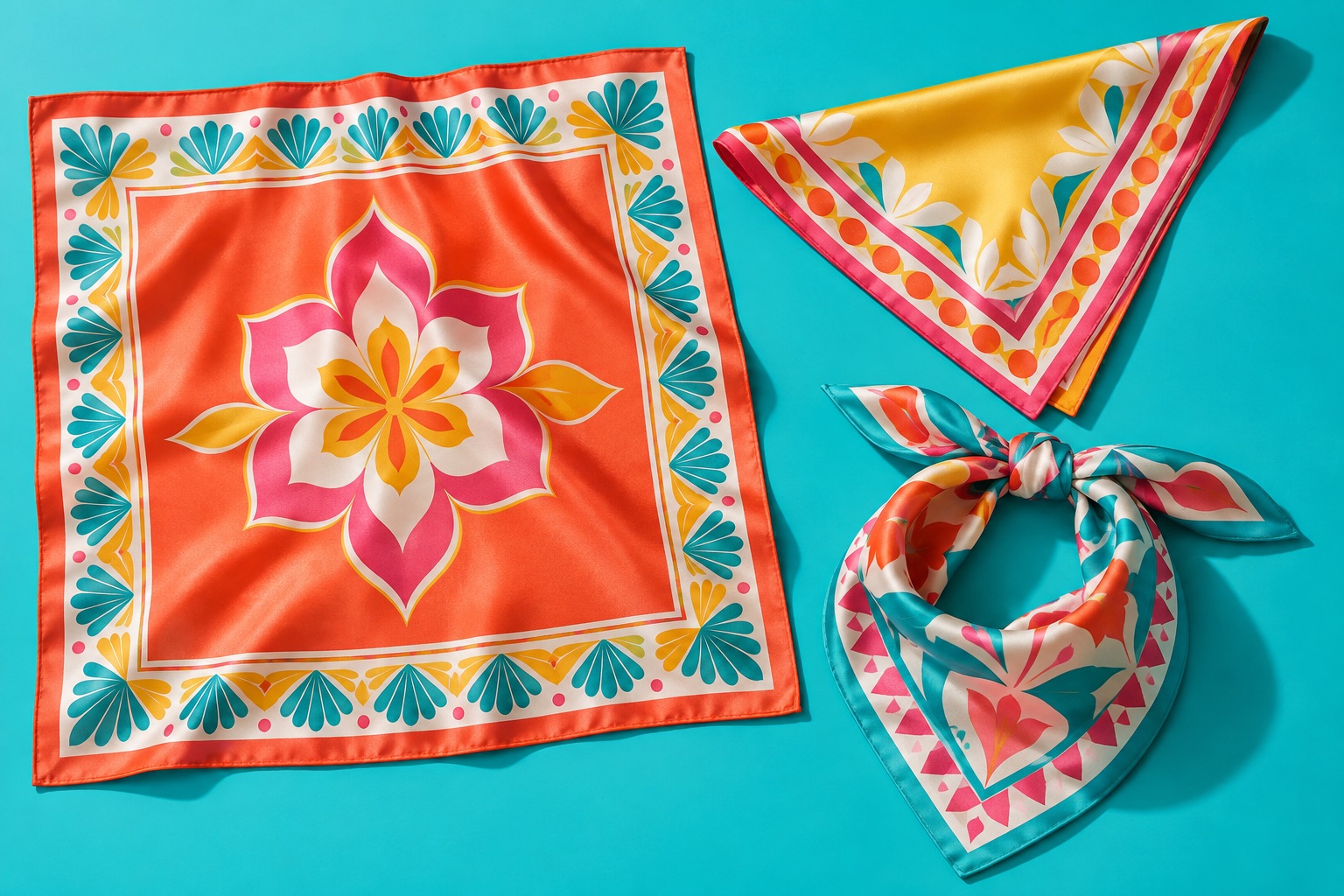
A custom silk bandana can sit between casual styling and premium scarf design. It works for fashion brands, hospitality, events and artist merchandise, but it should be engineered as a silk product rather than copied directly from cotton.
Select the wearing size
A compact square may suit hair, wrist and bag styling, while a larger format gives more room for neck knots and visible artwork. Confirm finished dimensions and production tolerance. Fold a paper sample diagonally to check usable length before approving the size.
Reinterpret the classic layout
Traditional bandanas use a border, corner motifs and a dense center field. That structure is useful because it creates interest at different folds, but the content can be completely original. Develop a brand-specific vocabulary through symbols, typography, illustration or local references.
Balance border and center
A wide border remains visible when the scarf is rolled, while a detailed center appears when it is worn open or as a head covering. Avoid essential text too close to the hem. Corners can carry four related motifs or one rotated design for a directional effect.
Choose the silk construction
Twill provides a classic scarf hand and enough structure for crisp knots. Habotai feels lighter and more casual. Satin creates high shine, which may amplify large color fields. The chosen fabric should support the desired balance between relaxed bandana styling and luxury presentation.
Use detail that the print can hold
Silk can reproduce fine artwork, but extremely small lines may close or soften after printing and finishing. View the file at actual size. On dark grounds, increase separation between small elements and consider how color will show on the reverse.
A good bandana reveals a different composition when worn open, folded diagonally and rolled into a narrow band.
Plan the edge finish
Hand-rolled hems add craft and dimension. Machine hems offer a consistent commercial finish. Match thread to the border or use intentional contrast. For a compact square, keep the finished edge proportionate so it does not consume too much of the design.
Build useful colorways
Instead of changing every color, retain one anchor tone or border across the collection. Make sure each colorway supports the same line clarity and brand recognition. Sample the lightest and darkest versions if their print behavior differs significantly.
Use the bandana’s proven visual structure, but adapt scale, fabric and finishing for silk. Test the design through real folds before production.