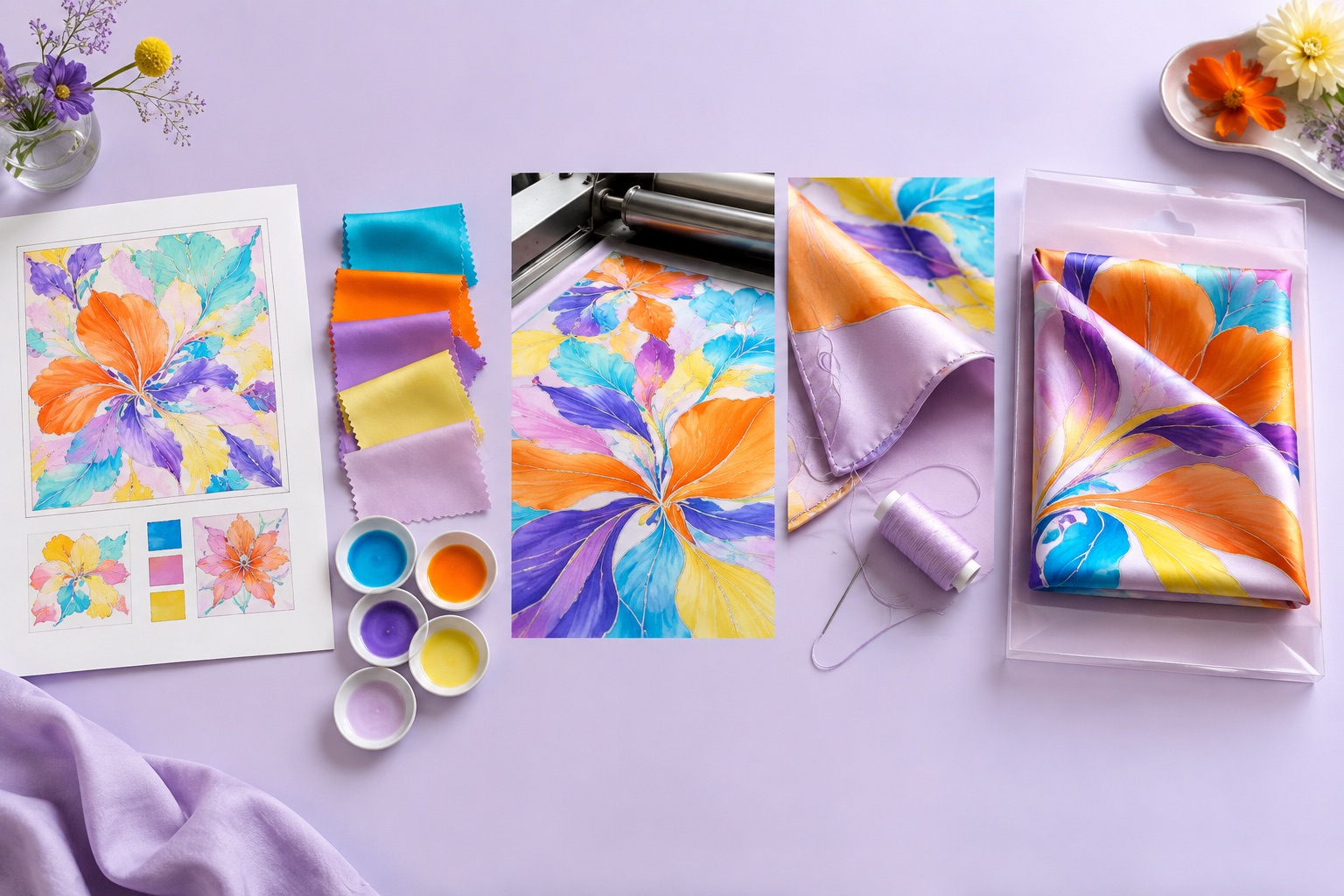
Our typical sample development time is 3–5 days, followed by 15–25 days for bulk production after sample approval and final order confirmation. Artwork preparation, buyer review and shipping sit around those production stages, so the complete project calendar should include them too.
Stage 1: brief and feasibility review
The factory reviews dimensions, silk, quantity, design count, print method, hem, labels, packaging and destination. Clear artwork and a complete quantity split can make this stage quick. Missing color references or undecided finishing may create several rounds of questions before a firm plan is possible.
Stage 2: artwork preparation
Files are checked for scale, repeat, border alignment, resolution and color references. A technical layout or digital proof may be issued for confirmation. Changes are inexpensive here compared with changes after printing, so review names, orientation and edge placement carefully.
Stage 3: sample development — typically 3–5 days
A physical sample shows how the selected fabric, print and hem work together. The typical 3–5 day period begins after artwork, material and construction details are confirmed. Shipping the sample to another country adds transit time, and the approval clock pauses while the buyer reviews it.
Stage 4: sample approval
Approve against specific criteria: color, artwork scale, dimensions, hem, label, handfeel and packaging. If revisions are needed, state them in one consolidated response. A second sample may be the safest choice for material, color or construction changes.
Stage 5: bulk production — typically 15–25 days
After sample approval and final order confirmation, fabric is allocated, printed, fixed or washed as required, cut, hemmed, labeled and pressed. Complex construction, larger quantities, public holidays and seasonal peaks can affect the final schedule.
Stage 6: inspection and packing
Finished scarves are checked against the approved sample and production tolerances. Quantity, measurements, print quality, stains, sewing, labels and packaging are reviewed before cartons are sealed. Inspection is part of the timeline, not spare time at the end.
Stage 7: shipping
Express courier, air freight and sea freight have different cost and transit profiles. Customs clearance can add variability. Work backward from the date the scarves must be physically available—not the date the campaign begins—and include a contingency buffer.
The most reliable schedule has named approval dates and one owner responsible for each decision.
How to keep the project moving
- Submit final dimensions and quantities with the first inquiry.
- Use consolidated feedback instead of separate messages from several reviewers.
- Approve the sample in writing and keep one approved reference.
- Confirm packaging before bulk scarves are ready.
- Choose the shipping method before the production finish date.
Production is only one section of the calendar. Early decisions, focused sample review and a shipping buffer are the best protection for a fixed launch date.