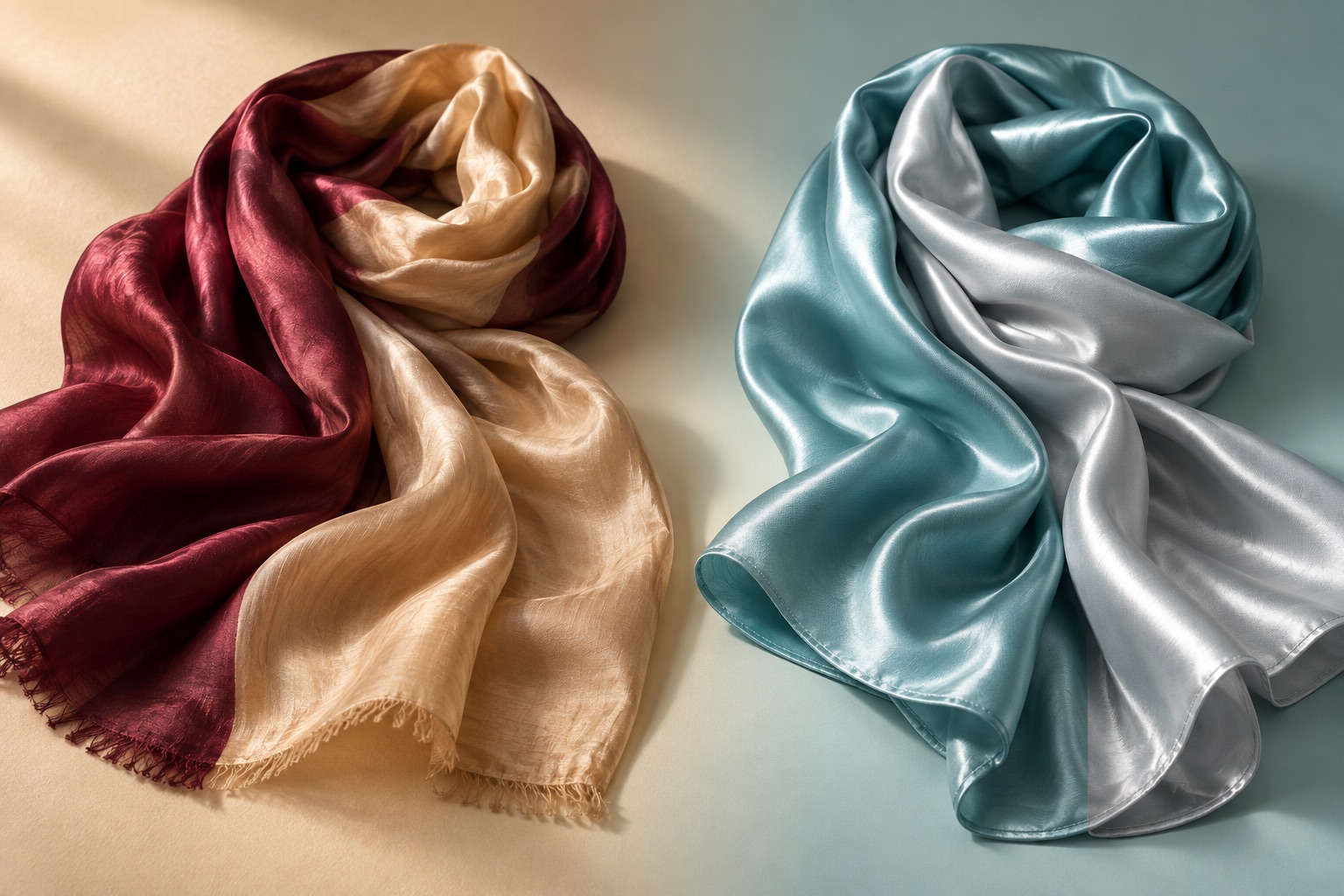
Material choice should follow the intended product, not a generic ranking. Silk is a natural protein fiber with distinctive luster and touch. Polyester is a synthetic fiber valued for consistency, durability and price flexibility.
Handfeel and drape
Silk combines softness, low weight and a fluid but lively drape. Its surface changes with weave and light. Polyester can be engineered to imitate some of these qualities, but its touch and movement remain different. Evaluate finished scarves, not only fabric swatches, because hems and printing influence the result.
Print appearance
Silk absorbs dyes and can produce rich, nuanced color with an elegant surface. Polyester commonly uses disperse dye or sublimation-based processes and can deliver vivid, repeatable graphics. Fine detail may be excellent on either material when artwork and process are compatible.
Reverse-side result
Light silk constructions can allow strong color penetration, while dense fabrics show more front-to-back difference. Polyester results depend on construction and print process; sublimated fabrics may show good penetration on lighter goods. Ask for the specific reverse-side appearance rather than relying on fiber name alone.
Care and daily use
Polyester is generally easier to wash and more resistant to wrinkling. Silk requires care appropriate to the dye, weave and finish. For uniforms or high-frequency use, maintenance may be a central requirement. For luxury gifting or fashion retail, tactile quality and natural-fiber positioning may matter more.
Cost and quantity
Polyester usually has a lower material cost and may support large promotional programs. Silk carries a higher raw-material and handling cost but can justify premium retail or gift positioning. Compare total specifications, because a complex box or labor-intensive hem can narrow or widen the difference.
Brand and labeling
Fiber content shapes the product story and must be labeled accurately. Never describe polyester as silk or use ambiguous wording that could mislead customers. Consider what the brand promises, what the audience values and which claims can be supported by the actual material.
The right fiber is the one that matches the product’s use, price, care expectations and honest brand position.
A practical decision checklist
- How should the scarf feel against skin?
- How often will it be worn and cleaned?
- What reverse-side appearance is required?
- Is natural-fiber positioning important?
- What retail or program budget must the product meet?
Choose silk for its natural hand, nuanced luster and premium character; choose polyester when care, consistency or program economics are the stronger priorities.