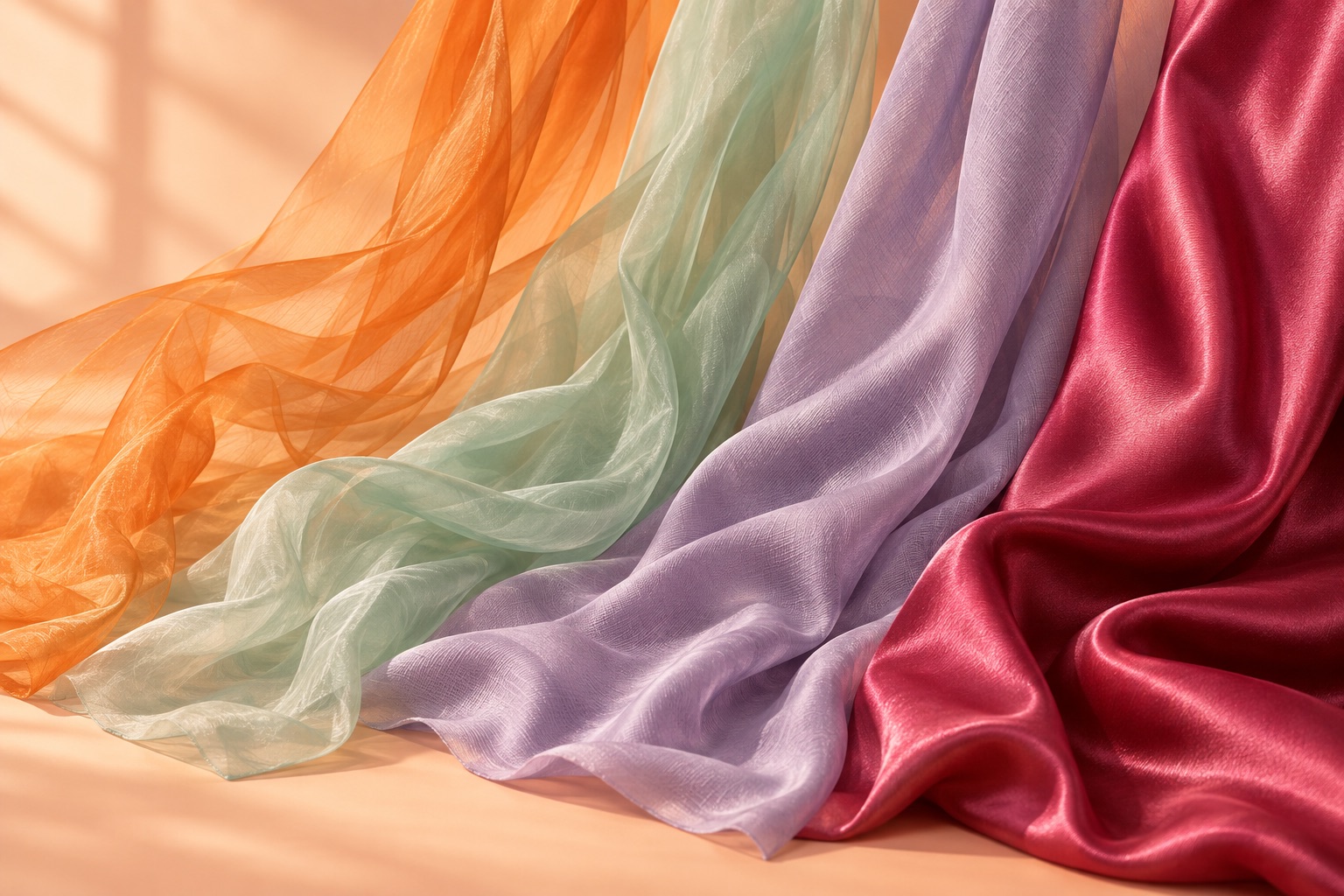
Momme, often written “mm,” is a traditional unit used to describe the weight of silk fabric. It is helpful when comparing options within a construction, but it should never be the only material specification.
What momme tells you
A higher momme generally means more silk by weight in a given area. Within the same weave, that often creates greater body, opacity and durability. A lower momme can feel lighter, more transparent and more fluid. The relationship is useful, but it is not identical across different weaves.
Why weave still matters
A silk twill has a fine diagonal structure and a controlled, supple drape. Satin has a smooth, lustrous face. Habotai is lighter and more even, while chiffon is open and translucent. A satin and a twill at similar weights will not feel or reflect light in the same way.
Lightweight scarf applications
Lighter silks create airy movement and compact knots. They can suit summer neck scarves, decorative layers and designs that benefit from translucency. They may also show more reverse-side color penetration. Fine hems and labels must be planned carefully so they do not overpower the fabric.
Medium-weight versatility
Many classic square scarves use a balanced medium-weight twill or satin because it holds color, folds cleanly and still drapes comfortably. This range can support neck, hair, bag and accessory styling. The ideal number depends on the exact construction and finish, so evaluate physical swatches.
Heavier silk options
Heavier silk creates a more substantial hand and can emphasize a luxury positioning. It may hold structured folds and resist transparency, but larger scarves can feel bulky in tight knots. Dense fabric also influences dye penetration and reverse-side appearance.
Compare swatches of the same dimensions, under the same light and with the finishing process included.
How weight affects printing
Fabric density, surface and absorbency influence color strength and detail. A dense twill may give a different reverse-side result from lightweight habotai. Dark grounds, fine lines and large flat colors should be tested on the chosen fabric rather than approved from a generic print sample.
Specify more than a number
A complete fabric description includes fiber, weave, nominal momme, usable width, color or optical base, finishing and supplier reference. Ask whether the stated weight is nominal and what production tolerance applies. Keep an approved fabric swatch with the sample.
Momme is a valuable comparison tool, not a standalone quality grade. Choose weight together with weave, size, styling and print requirements.