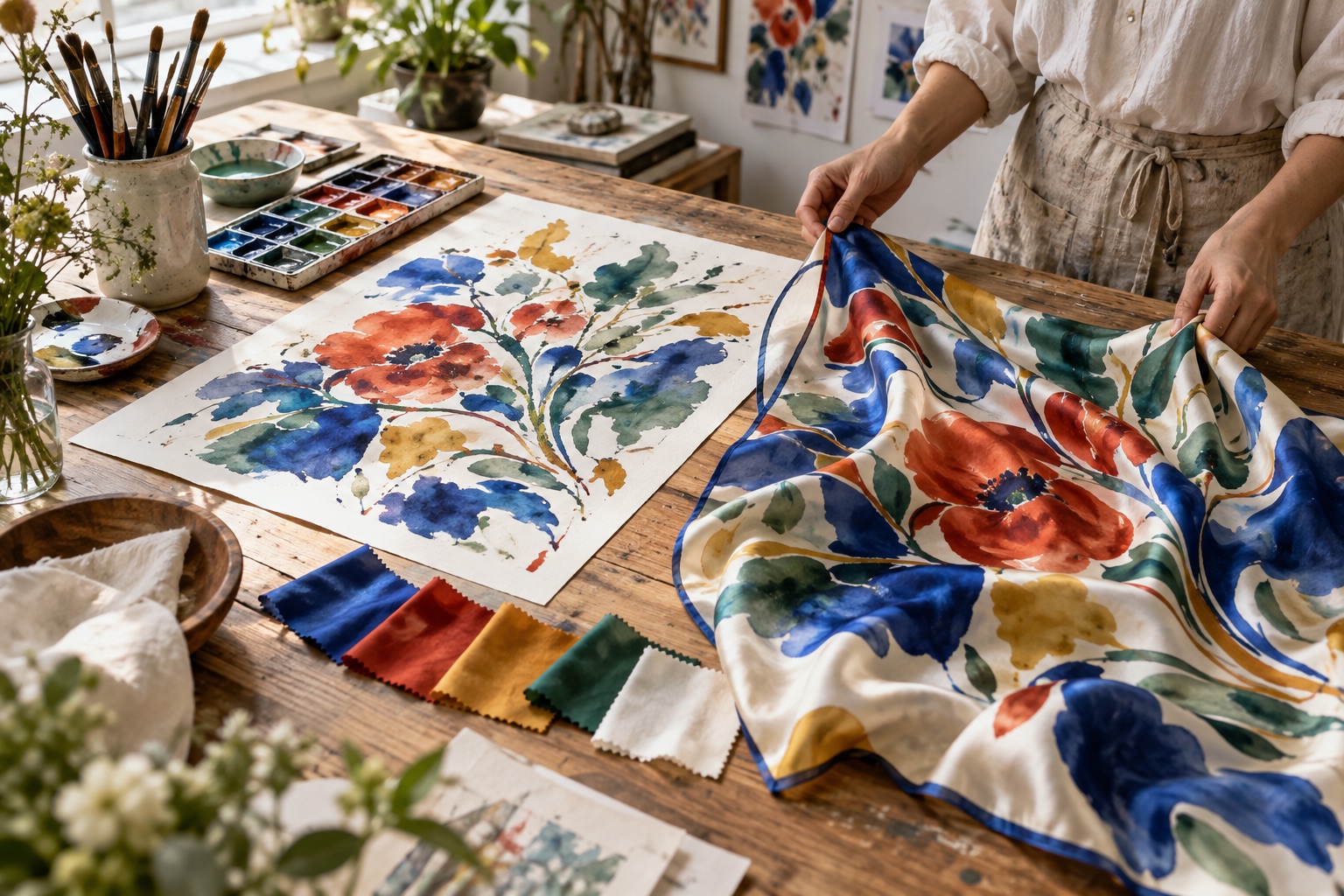
Silk scarves give artists a wearable format with strong color and generous visual space. A successful collaboration respects the original work while making deliberate decisions about crop, scale, borders, signatures and production.
Agree on rights and approvals first
Document which artwork may be used, on which products, in which territories, for how long and at what quantity. Define whether the artist approves adaptations, color changes, packaging and marketing. Commercial and legal details should be settled before files enter production.
Choose the right section of the work
A rectangular painting may not fit a square scarf without cropping. Consider extending a background, building a border or creating a repeat from selected elements. Avoid stretching. Ask whether the full work, a detail or a new scarf-specific composition best represents the artist.
Design for folds
A central subject can disappear inside a knot. Place visual interest in corners, borders and several zones so the work remains recognizable when folded. Print a full-size paper proof and test common folds before finalizing the layout.
Protect color intent
Identify the most important colors and provide physical references where possible. Silk luster and fabric base will change perception compared with canvas or screen. Review strike-offs under neutral light with the artist or an appointed creative approver.
Handle signatures and attribution
Decide whether the signature belongs inside the printed artwork, on a sewn label, on packaging or in an insert. Keep it readable but proportionate. Include artwork title, artist name, edition information and care content in a consistent brand hierarchy.
A scarf collaboration succeeds when it feels like a new edition of the artwork, not promotional merchandise added afterward.
Consider edition structure
Limited editions can use numbered cards or documented quantities, but operational control is essential. Open editions provide easier reordering. Define whether colorways are separate editions and how samples, seconds and replacements are counted.
Plan photography and storytelling
Capture the scarf flat to show the complete composition and styled to show its life as an accessory. Credit the artist in product pages, press material and packaging according to the agreement. Explain the translation process without claiming techniques or materials that were not used.
Keep one approved master
Retain the final artwork, color strike-off, scarf sample, label proof and packaging proof together. This protects the artist’s intent in bulk production and future reorders.
Treat the scarf as a new artistic format. Set rights and approval roles early, then control crop, folds, color and attribution through a physical sample.