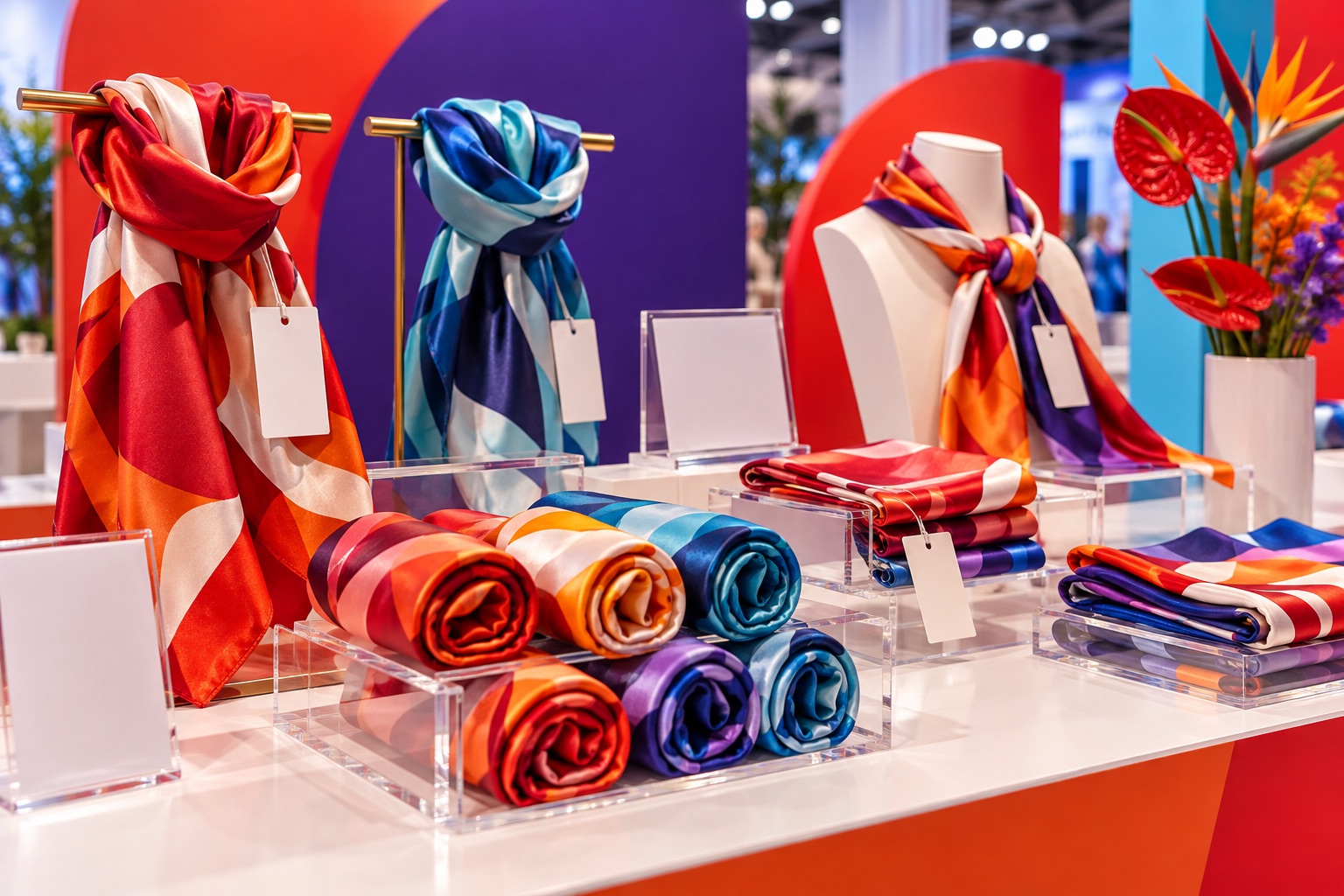
A silk scarf can be sold, gifted to speakers or included in a premium ticket package. Because the delivery date cannot move, event projects need a disciplined brief and enough time for physical sampling.
Start with the audience
A fashion festival, museum opening, corporate summit and music event have different visual languages. Define whether the scarf should be collectible, formal, playful or easy to wear with a uniform. The audience determines size, color and price point.
Use event identity with restraint
Translate the event through pattern, architecture, location, theme or symbols. A large date or sponsor logo can limit future wear. Place necessary marks in the border, a corner or packaging so the scarf remains desirable after the event ends.
Select a practical format
Compact squares and twillies are easy to demonstrate and can suit broad audiences. Larger squares create a stronger collectible object and more artwork space. Consider display, price and how attendees will carry the product during the event.
Fix the approval chain
Events often involve organizers, sponsors, artists and venue teams. Nominate one person to consolidate comments and one final approver. Late feedback from an unexpected stakeholder can consume the contingency time needed for freight.
Work backward from arrival
Set the required warehouse or venue delivery date, then allow time for customs, inspection, production, sample shipping and review. Use the event opening date only as a final deadline, not the normal arrival target. Keep a buffer for local distribution and staff training.
A fixed event date makes delayed approval as risky as delayed production.
Plan quantities by channel
Separate retail stock, VIP gifts, press samples, staff use, replacements and archive pieces. If multiple colorways are offered, forecast each one rather than assuming an even split. Record who owns leftover inventory after the event.
Make packaging useful
A compact sleeve or envelope protects the scarf and provides space for the event story, artist credit, barcode and care information. Oversized rigid boxes may create storage and transport problems at a busy venue. Test how quickly staff can pack or hand over each unit.
Support the launch
Provide one open scarf for display, one styled sample and a simple tying card or QR link. Photograph the complete artwork before the event. Make product information available to staff so they can explain the silk, artist and production story accurately.
Design an event scarf for life beyond the event, then protect the fixed date with a single approval owner, a delivery buffer and channel-specific quantities.