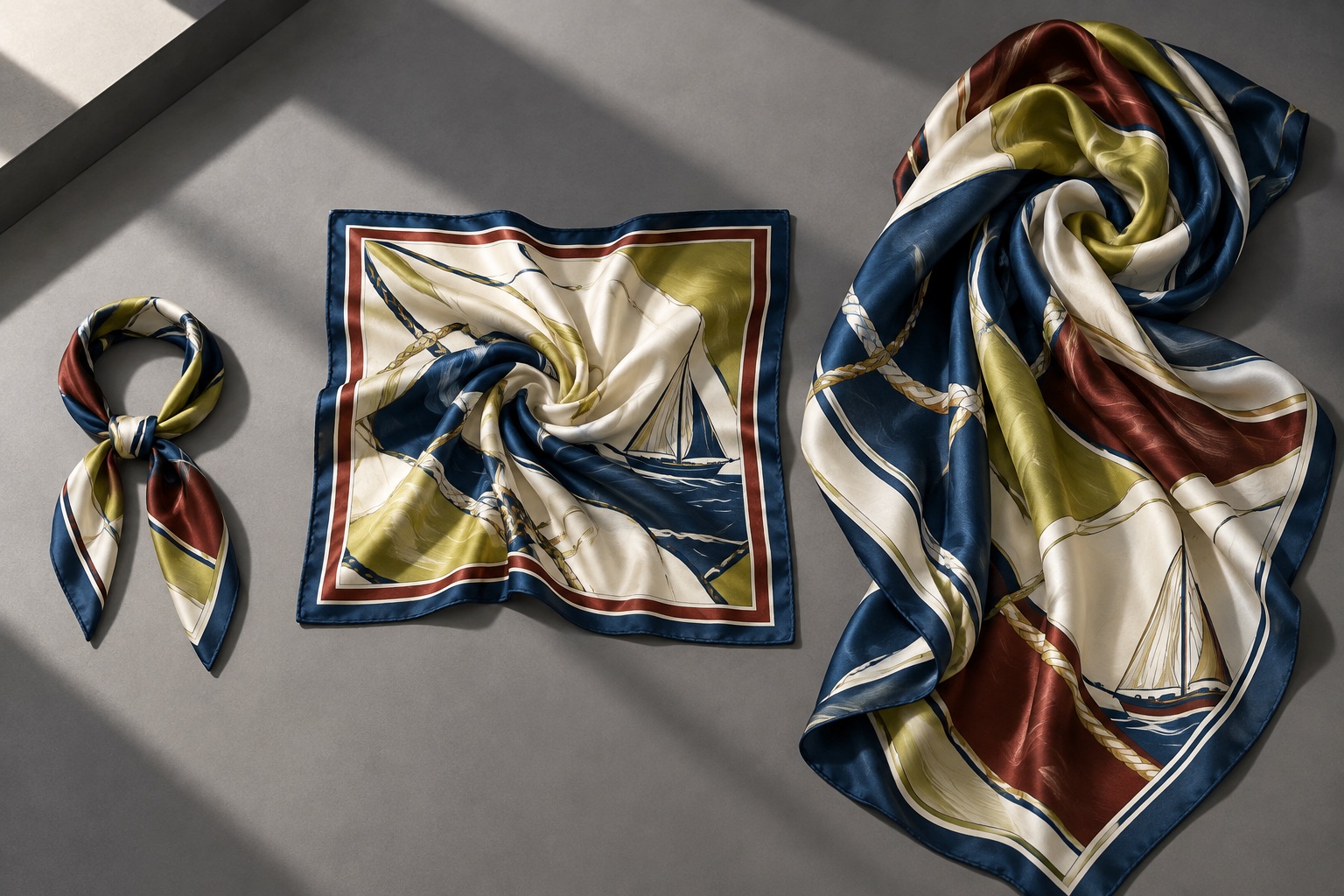
There is no single correct scarf size. The useful question is: what should the wearer be able to do with it?
Start with styling, not a measurement
A small square works as a neck accent, hair tie or bag detail. A classic square creates more styling options and gives artwork room to breathe. A large square can become a statement wrap, while a long or skinny format creates a completely different rhythm.
Before selecting dimensions, list two or three intended uses. That keeps the decision practical and makes it easier to evaluate prototypes.
Common square-scarf starting points
The ranges below are useful discussion points, not fixed industry rules. Final dimensions should be confirmed with the fabric weight, hem construction and target customer in mind.
| Approximate range | Typical character | Design implication |
|---|---|---|
| 45–55 cm | Compact, light, easy to tie | Keep motifs and borders readable at a smaller scale |
| 65–70 cm | Versatile classic square | Balances styling flexibility with a clear art canvas |
| 85–90 cm | Statement size with generous movement | Supports complex compositions and broader borders |
| 100 cm and above | Wrap-like, dramatic and expansive | Fabric weight becomes especially important |
Long and skinny scarves need different artwork
A long rectangle rewards directional movement. Repeats, border stripes and motifs that travel along the length tend to work better than simply cropping a square design. A skinny scarf has very little width, so the composition should remain legible after it is folded or knotted.
Ask where the visual focus should land: at the ends, around the center, or continuously across the whole length. The answer helps define motif placement.
Size and silk weight must be considered together
A fabric that feels light in a pocket square can become substantial in a large scarf. Likewise, a very light fabric may not hold the shape expected from a small neckerchief. Evaluate knot volume, edge weight and drape together. This is one reason a full-size sample is more informative than a small printed swatch.
Give borders enough room
Borders are often a key feature of custom scarves, but their visual width changes with the overall format. A border that looks bold on a small square may feel narrow on a large one. Hem allowance also affects the visible frame. Set up the artwork at final dimensions and agree which portion will remain visible after finishing.
Design the scarf at the size it will be worn—not as a square image that will be enlarged later.
Remember packaging and presentation
Larger pieces require more considered folding and a package with enough room to avoid harsh creasing. If the scarf will be gifted or displayed in retail, test the fold sequence. The first view when the box opens should feel deliberate and should not hide the most meaningful part of the design.
Questions to settle before sampling
- What are the two main ways the scarf will be worn?
- How much of the artwork should remain visible when folded?
- Does the chosen silk create the right knot volume?
- Are the border and signature details proportionate?
- Will the final fold fit the intended packaging?
Choose dimensions by working backward from use, then refine the artwork, fabric weight and finishing around that format.