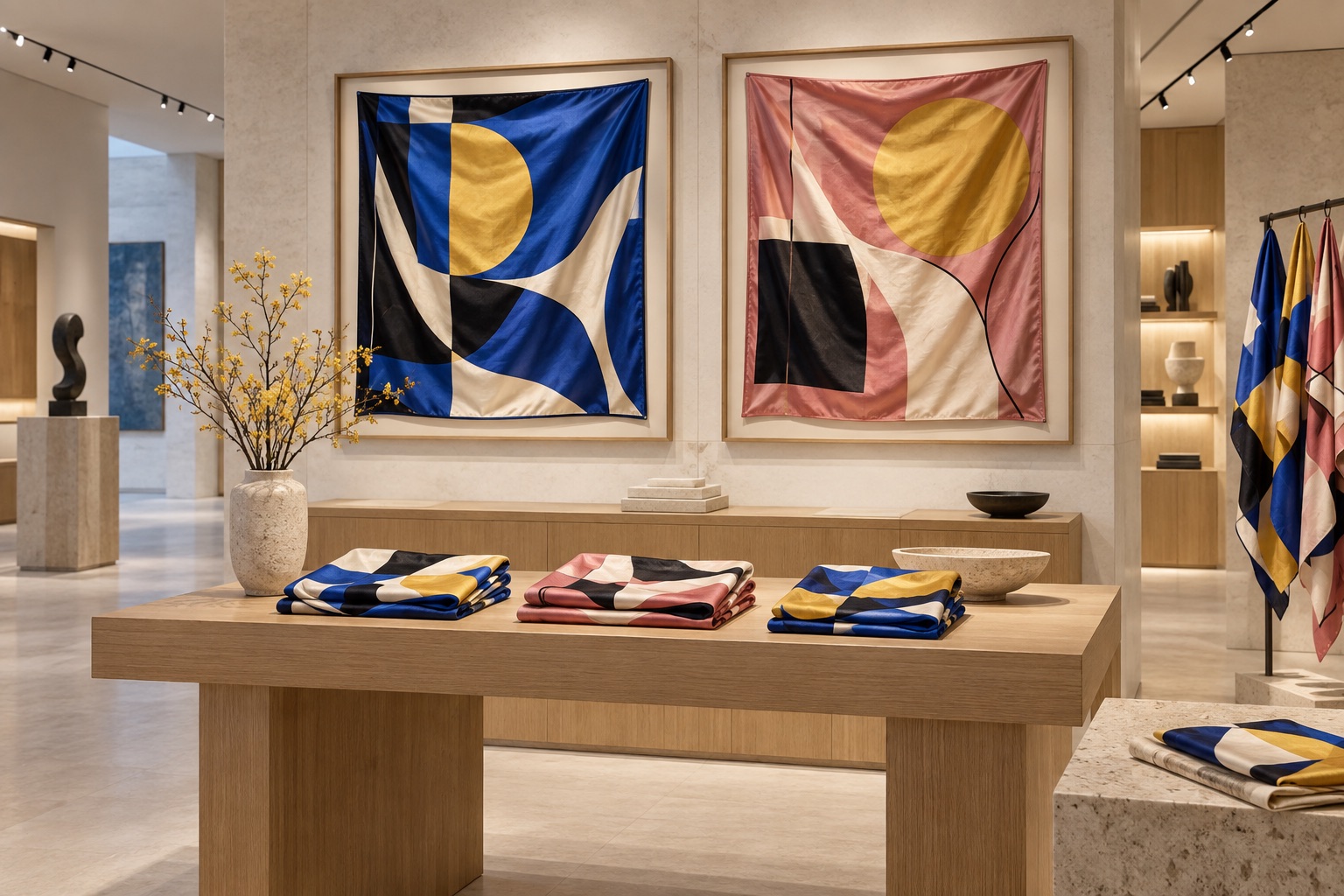
Scarves are natural museum products because they combine image, material and story. The strongest examples respect the source object, credit it clearly and adapt its visual language for folds, borders and daily wear.
Select source material responsibly
Confirm image rights, artist estates, donor restrictions, cultural permissions and credit lines before design begins. High-resolution photography and accurate object information should come from the museum’s approved records, not from unverified online images.
Choose translation rather than simple reproduction
A painting, textile fragment, architectural detail or archive document may not fit a square directly. Designers can crop, repeat, mirror or build a border from selected elements, but the adaptation should remain consistent with curatorial guidance and the institution’s interpretation.
Design for the customer
Museum visitors range from dedicated collectors to travelers seeking a compact gift. Consider one hero square and a more accessible small format. Test whether the palette works with common wardrobes and whether the artwork remains recognizable when tied.
Use accurate color references
Agree on whether the target is the physical artwork, an approved digital master or a publication. Gallery lighting, photography and silk luster can all shift perception. Physical strike-offs reviewed by the appropriate museum team provide the most reliable approval path.
Write an interpretive insert
Packaging can name the source object, artist or maker, date, collection and relevant story. Keep the text concise and verify it with the museum. Add fiber, origin and care information separately so interpretation is not crowded by compliance content.
The product gains value when customers can understand exactly how it connects to the collection.
Plan the retail system
Define product code, barcode, price, dimensions, folded pack size and display method. Packaging must survive shop handling and travel without creating excessive volume. An open display scarf helps customers see the complete artwork.
Manage editions and reorders
For exhibition-specific products, align quantity with attendance, shop traffic and online sales. Keep one approved master sample and final files for reorders. If the exhibition has a closing date, decide whether remaining stock can continue under the same rights agreement.
Review the whole story
Place the scarf, label, insert, packaging and product page together before approval. Confirm that every title, date, credit, image and claim is consistent. A beautiful print cannot compensate for inaccurate attribution.
Begin with rights and curatorial accuracy, then translate the source into a wearable composition supported by clear interpretation and practical retail packaging.