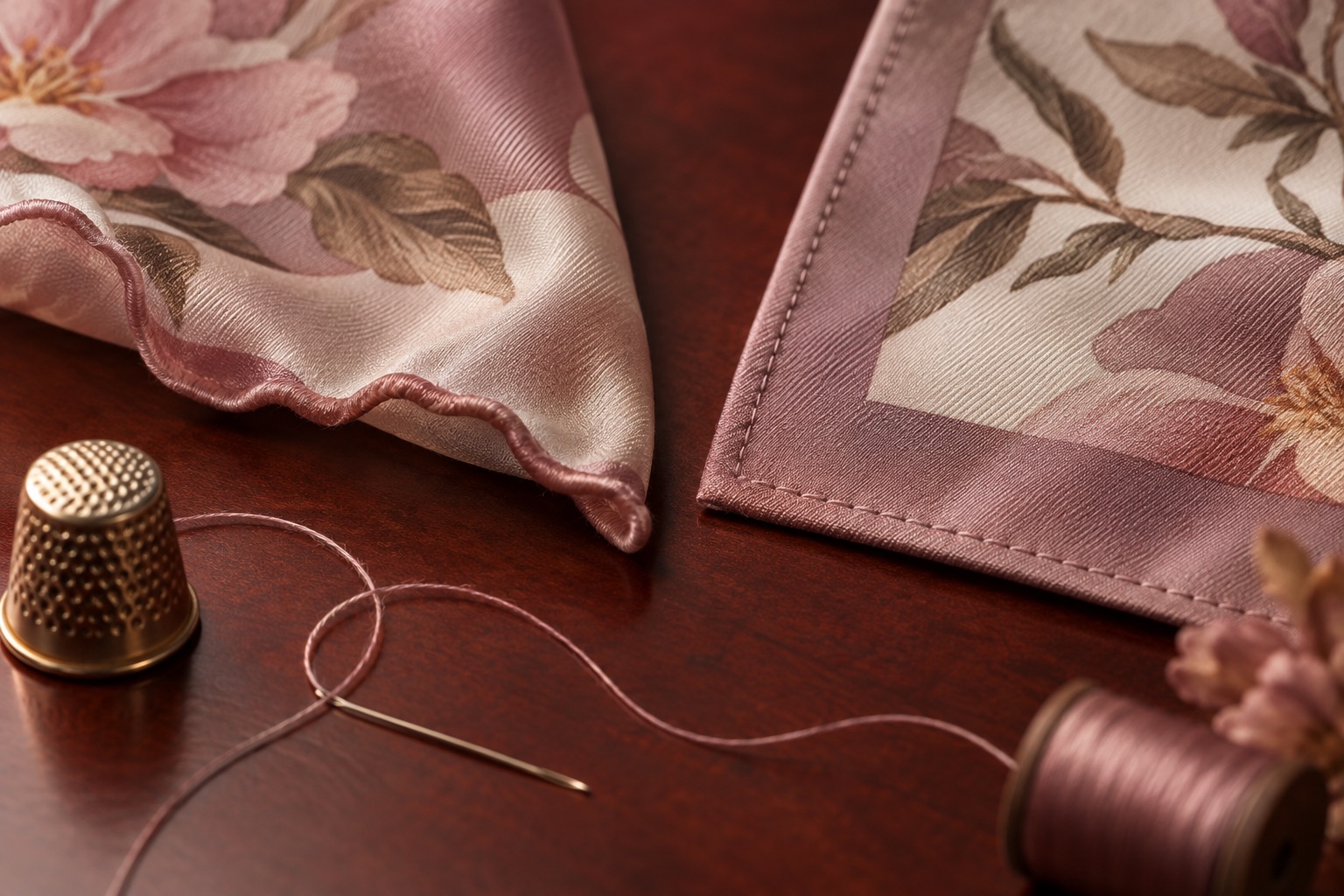
A scarf hem is not simply a way to stop fabric from fraying. It frames the artwork, changes edge weight and signals the character of the finished piece.
What is a hand-rolled hem?
In a traditional hand-rolled finish, the raw edge is turned into a narrow roll and secured with small hand stitches. The result has gentle dimensionality and a crafted appearance. Slight variation is natural because the work is done by hand; the goal is controlled consistency, not a mechanically flat line.
The direction of the roll matters. Many premium scarves place the rounded roll toward the face of the scarf so it becomes part of the visible frame. Confirm the expected face and roll direction before approval.
What is a machine hem?
A machine-finished hem is folded and stitched with equipment for a clean, repeatable edge. Different machine constructions produce different widths and visual effects. A good choice can look refined and can be practical for specific fabrics, formats and production programs.
“Machine hem” is a category rather than a single look. Ask to see the exact construction proposed for your material.
| Consideration | Hand-rolled | Machine-finished |
|---|---|---|
| Visual character | Dimensional, artisanal, softly varied | Clean, regular and controlled |
| Edge feel | Rounded, delicate frame | Depends on fold width and stitch setup |
| Consistency | Evaluated within handwork tolerance | Typically more mechanically uniform |
| Design fit | Premium squares and pieces where craft is visible | Many formats, collections and practical programs |
Match the hem to the silk
Very light chiffon, fluid satin and structured twill behave differently at the edge. A finish that looks balanced on a substantial square may feel heavy on an airy scarf. Review the edge on the intended fabric and at the intended size.
Consider the border artwork
A contrast border makes the hem highly visible. Thread color, roll direction and stitch spacing become part of the composition. A tonal border is more forgiving, but it still needs consistent width. Place signatures and small motifs far enough from the edge that the finishing does not crowd them.
The best hem is the one that looks inevitable—as if the artwork and edge were designed together.
How to review a sample hem
- Inspect all four sides and each corner.
- Compare the visible width of the rolled or folded edge.
- Check stitch tension and make sure the fabric is not puckered.
- Confirm the thread color in natural light.
- Feel whether the edge weight suits the body of the scarf.
- Fold and tie the scarf to see how the hem behaves in use.
Do not treat handwork as machine work
A hand-rolled edge carries small human differences. Agree on the acceptable appearance through an approved sample and clear reference photos. Quality control should look for neat, balanced craft—not an unrealistic promise that every stitch will be numerically identical.
Select the edge finish with the fabric and border design. Approve the physical construction, direction, thread and overall appearance before production.