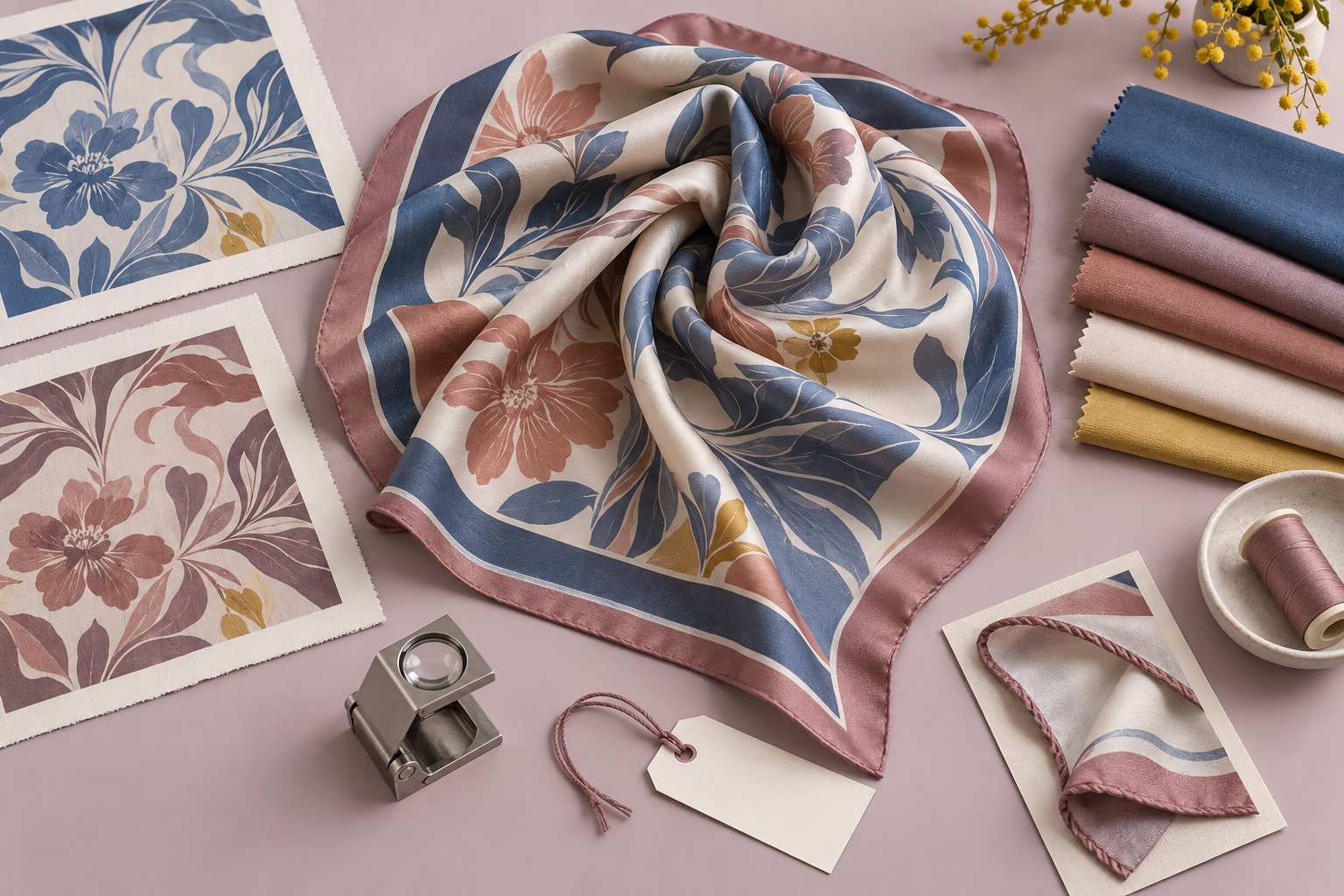
A proof on paper can confirm layout. A screen can show detail. Only a scarf sample can show how those decisions behave on the selected silk.
Sampling connects design and production
Before sampling, the project is a set of specifications: file, dimensions, fabric, print method and hem. The sample brings them together. It exposes interactions that are easy to miss, such as a border feeling too narrow after rolling or a color losing contrast in the sheen of the fabric.
What a complete sample can validate
- Overall composition at actual size
- Motif scale and placement
- Color relationships on the chosen silk
- Fabric weight, opacity and drape
- Reverse-side appearance
- Hem width, direction, thread and corners
- Folding and fit inside the intended package
Review in a useful sequence
Begin with the whole scarf from a short distance. Does it create the intended first impression? Then move closer to color, line quality and small motifs. Finally, handle it: fold, knot and drape the scarf. This sequence prevents one tiny detail from distracting from a larger composition problem.
Compare against the brief
Use the original project priorities as the review framework. If the most important goal was an exact brand accent, start there. If the piece must tie neatly as a uniform, test the knot. Avoid an unstructured list of personal preferences; connect every requested change to an intended use or approved reference.
A good sample review does not ask, “Is this perfect?” It asks, “Is this the scarf we agreed to make?”
Separate corrections from new ideas
A correction brings the sample closer to the existing brief—for example, adjusting a border that printed off-center. A new idea changes the brief, such as introducing another color or moving the signature. Both may be worthwhile, but labeling them clearly keeps the revision process and timing understandable.
Create one consolidated feedback round
Gather comments from decision-makers and resolve contradictions before sending feedback. Mark each requested change on a visual reference and write it in plain language. A single approved list reduces the chance of implementing an older or incomplete comment.
Keep the approved sample
Once accepted, the sample becomes the reference for the approved appearance. Store it away from direct light, moisture and handling damage. Production may still include normal process variation, so agree which features are critical and how quality will be judged.
A simple approval checklist
- Artwork orientation and visible area are correct.
- Key colors are accepted under agreed lighting.
- Fine details remain legible.
- Face and reverse work for intended styling.
- Fabric, dimensions and edge construction match the specification.
- Packaging fold and presentation have been tested.
- All final changes are recorded in one place.
Treat sampling as a decision stage, not a formality. A deliberate review creates a clearer, more reliable production reference.