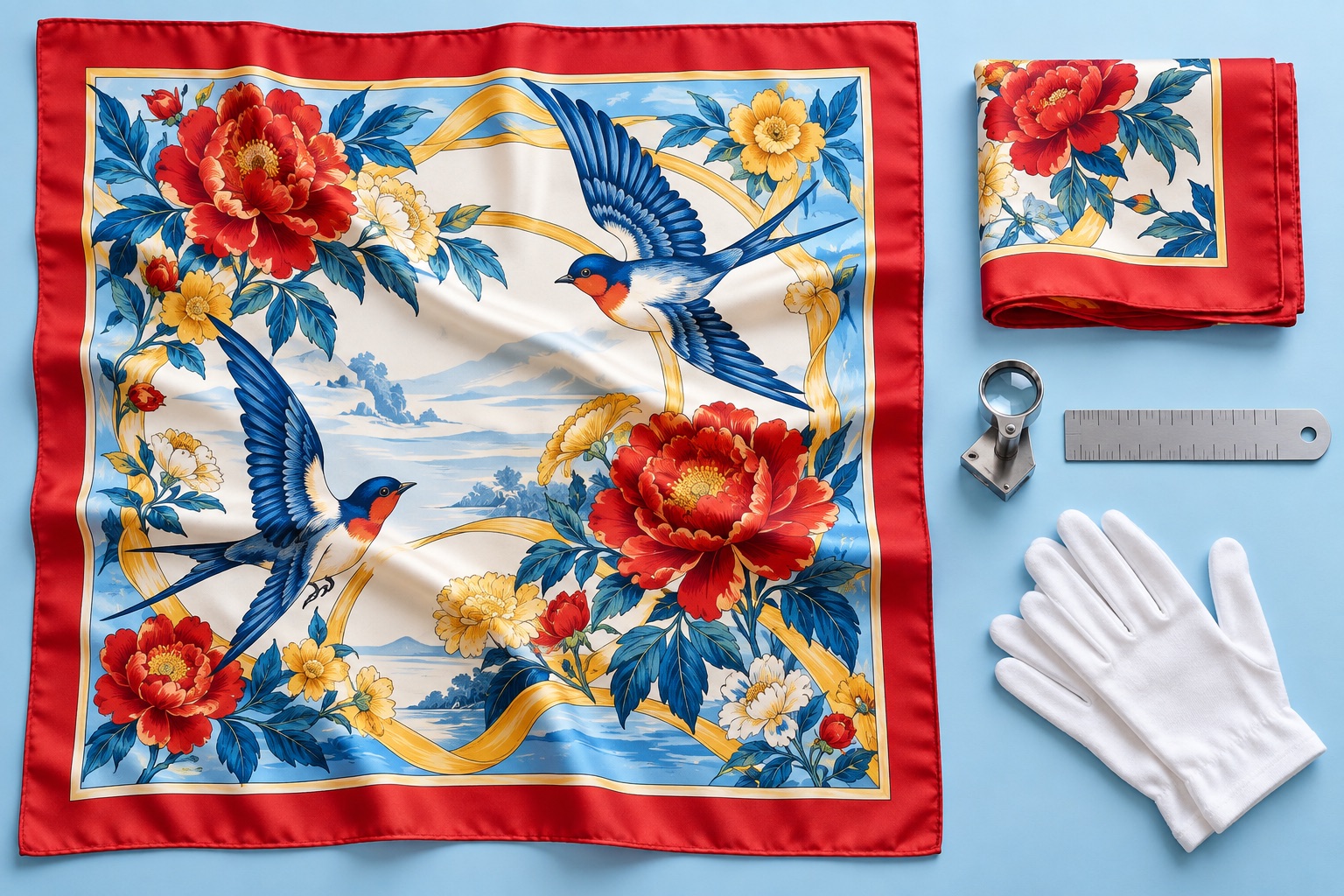
Quality control is not a search for an abstract idea of perfection. It is a structured comparison between the production and the agreed specification, approved sample and reasonable textile tolerances.
Start with the approved reference
Keep one sealed or clearly identified approval sample. Record the fabric, print method, dimensions, hem, label, packaging and approval date. Photographs are useful for communication, but a physical sample provides stronger evidence for color, handfeel and construction.
Inspect fabric and surface
Check that the silk construction and weight match the order. Look for holes, pulls, slubs outside the accepted character of the fabric, oil marks, water spots, creases and uneven finishing. Inspect under consistent light and handle pieces with clean hands or gloves as appropriate.
Review print quality
Compare overall color, motif scale, detail, line clarity, registration and reverse-side appearance. Check borders for alignment with cutting and hemming. Look for banding, ink marks, unprinted areas, color contamination and abrupt differences within the same order.
Measure the finished scarf
Measure across defined points without stretching the silk. Natural textiles and hand finishing require agreed tolerance. Confirm squareness or intended shape, border balance and any diagonal distortion. Sample pieces from across the production run rather than measuring only the top of one carton.
Check hems and sewing
Inspect stitch consistency, rolled diameter, corner formation, thread color, skipped stitches, loose ends and puckering. Hand-rolled hems will show subtle human variation, but they should remain controlled and secure. Make sure labels are straight, correctly oriented and attached without damaging the silk.
Verify quantity and assortment
Count total pieces and the split by artwork, colorway and size. Confirm carton labels match the contents. When several designs look similar, use clear product codes so that packing teams and warehouses can distinguish them.
An inspection standard should explain what to check, how to check it and what happens when a defect is found.
Examine pressing and packaging
Scarves should be clean, dry and pressed or folded to the approved presentation. Check that folds do not crush hand-rolled edges. Ensure sleeves, tissue, cards, boxes, barcodes and warning labels are correct and that packaging materials do not transfer color or odor.
Create a defect classification
Separate critical, major and minor issues according to product and market risk. A wrong fiber label is different from a small removable thread. Agree on sampling level and acceptance criteria with the inspection party before the cartons are ready.
Quality control becomes objective when it is tied to a complete specification, an approved physical sample and written tolerances.